Why the Scrovegni Chapel is also called the Arena Chapel
Two names, one building, and the confusion is entirely reasonable: art-history books tend to say Arena Chapel, Italian signage says Cappella degli Scrovegni, and a traveller searching for both ends up wondering whether Padua has two famous chapels. It has one.
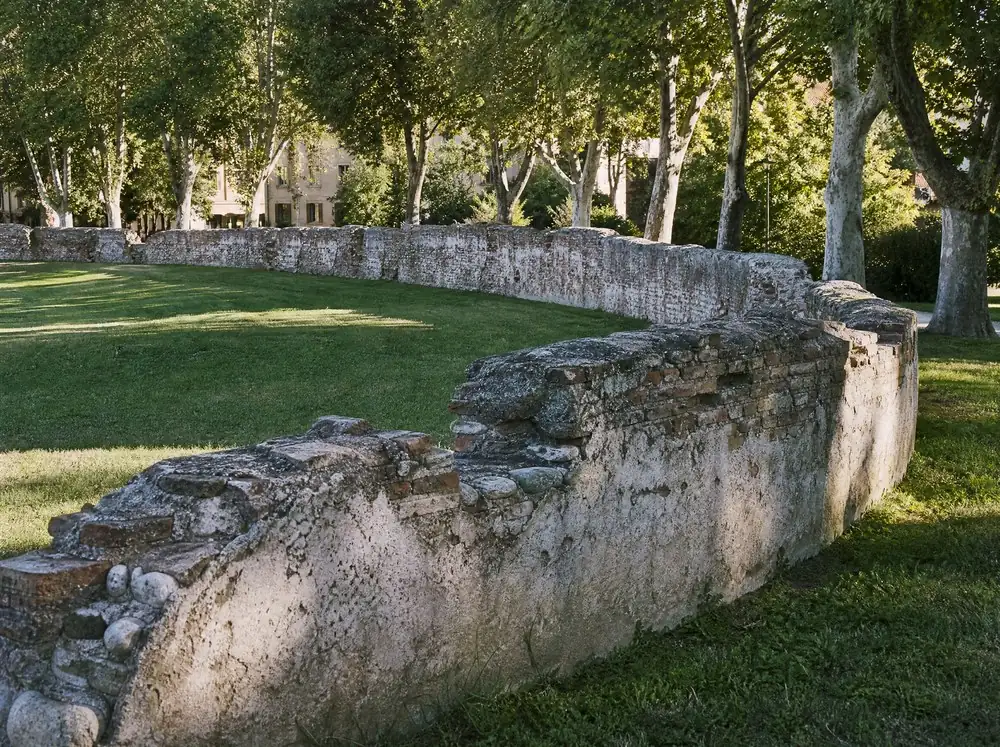
The arena came first
The Roman arena at Padua is the older thing on this ground by more than a thousand years, and enough of its elliptical wall survives that you walk past it on your way to the chapel without necessarily registering what it is. Enrico degli Scrovegni bought land abutting the arena site and built a palace on it, with this chapel attached. The palace is gone. The chapel and a good deal of the arena wall are not, and the public gardens that hold both are named for the arena rather than for the family.
So “Arena Chapel” is a location name of the plainest kind — the chapel by the arena — and it stuck in English-language scholarship because that is how the early literature referred to it. “Cappella degli Scrovegni” is what you will see on the ticket, on the operator’s site and on the signs in Piazza Eremitani, and it is what to search for if you want the booking page rather than an essay.
Who Enrico degli Scrovegni was
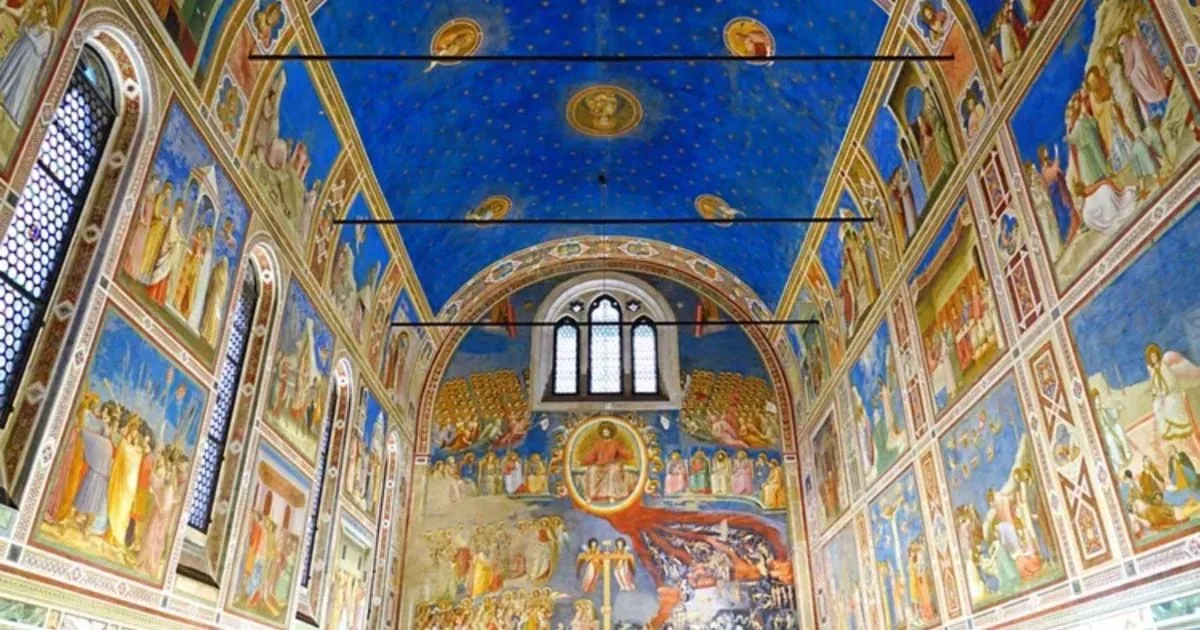
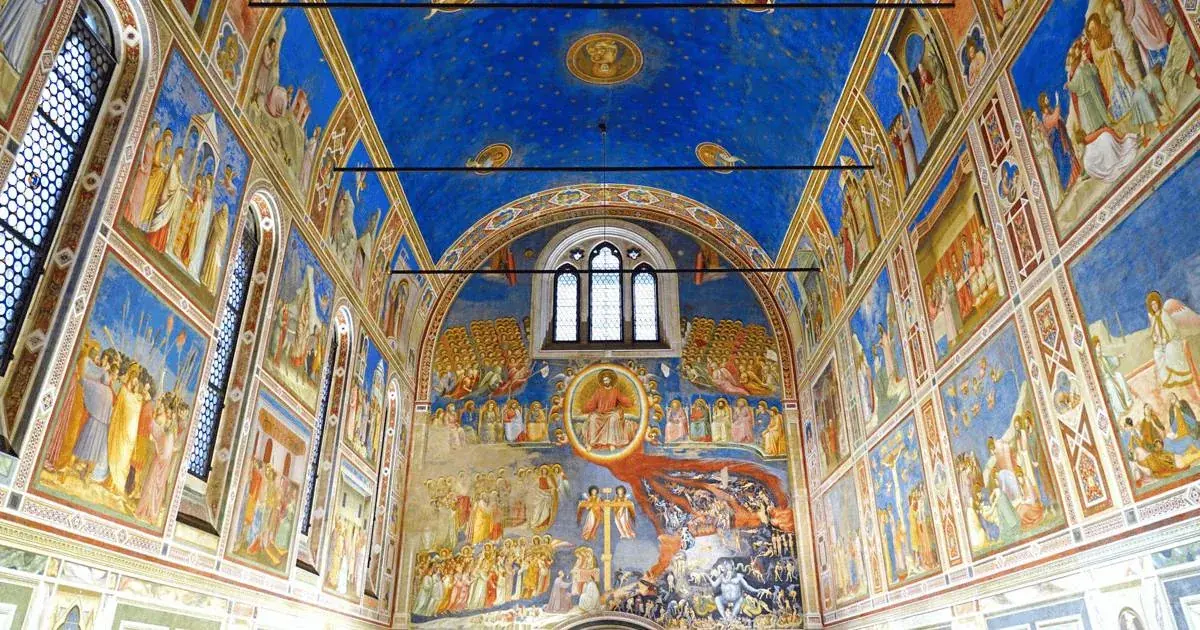
A Paduan money lender, rich, who died in 1336. The chapel is his: he commissioned it, he was buried in it, and he had himself painted into it, kneeling on the side of the blessed in the Judgement on the entrance wall, holding up a model of the building he had paid for (the wall, and the man in it).
The part everybody wants to be true is that he built it to atone for his father’s sins. His father Reginaldo was a money lender too, and Dante — a contemporary, and a man who knew Padua — placed him in the seventh circle of Hell among the usurers. That much is Dante. That the chapel was built as atonement for usury is a tradition, and it is disputed: the alternative reading is that a very rich man built a very sumptuous private chapel beside his own palace because that is what very rich men did. Both readings are worth knowing, and a guide who gives you the second one as well is worth the difference in price.
When it was built, and how fast
The operator’s sentence is exact: the chapel “was frescoed between 1303 and 1305 by Giotto, upon the commission of Enrico degli Scrovegni”. The dates usually given for the campaign are 25 March 1303 to 25 March 1305, the second being the chapel’s definitive consecration — two years to the day, 730 of them, and 625 days’ work at the plaster went into the room in that time (what a day’s work means in fresco).
Two years is fast for a scheme this size, and it is one of the reasons the room holds together the way it does. Nobody came back a generation later and repainted a wall in a new fashion. Giotto was between his mid-thirties and his forties, he had a workshop, and he finished.
Which name to use
- Booking, tickets, signage, taxis: Cappella degli Scrovegni, or Scrovegni Chapel. This is the name that gets you there.
- Reading and lectures: Arena Chapel is common, especially in English-language art history, and means exactly the same room.
- The address either way: Piazza Eremitani 8, which is the ticket office rather than the chapel door (the hundred metres nobody mentions).
 Most-reviewed
Guided Tour of Giotto's Scrovegni Chapel
 Priced per party
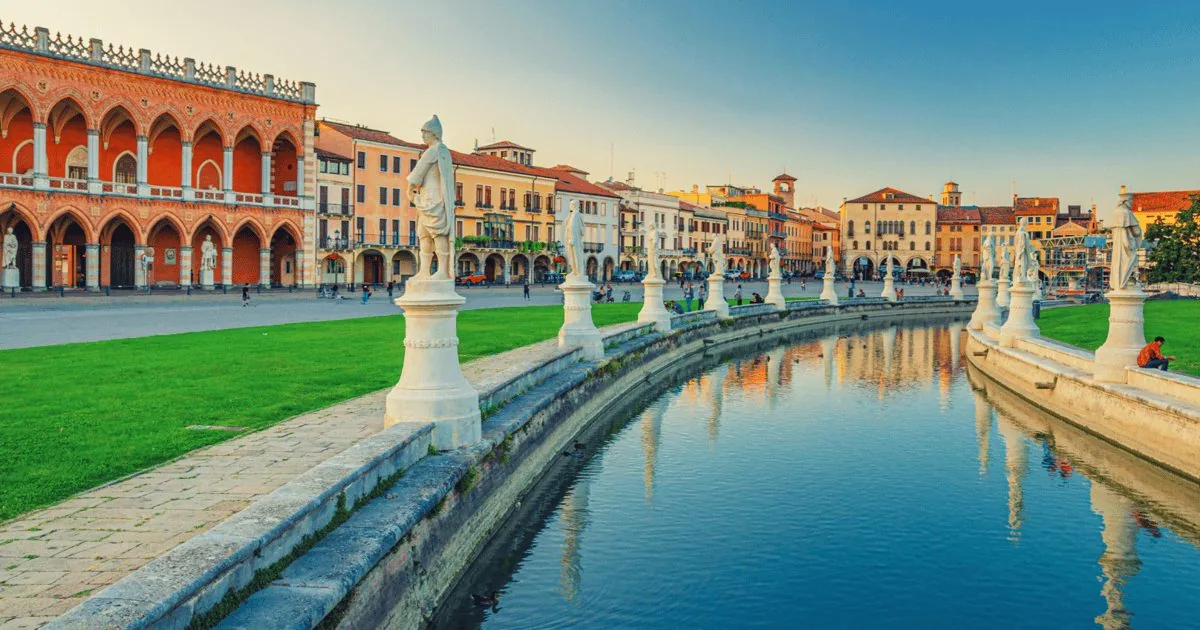
Private Tour by Night: Scrovegni Chapel and Main Monuments of Padua
 Priced per party
Walking Tour of Padua's major monuments and the Scrovegni Chapel
Next: what Giotto painted inside it, why the room matters, and the wall you turn round to see.
Frequently asked questions
Why is the Scrovegni Chapel also called the Arena Chapel?
Because of what was already on the ground. Enrico degli Scrovegni built it on land he bought that abutted the site of a Roman arena, and the public gardens around it are still the Giardini dell’Arena. “Scrovegni” names the patron, “Arena” names the place, and both refer to the same building.
When was the Scrovegni Chapel built?
The operator’s own words are that it “was frescoed between 1303 and 1305 by Giotto, upon the commission of Enrico degli Scrovegni”. The campaign is usually dated 25 March 1303 to 25 March 1305, the second date being the chapel’s definitive consecration — two years, and 625 days’ work at the plaster.
What is the Scrovegni Chapel in Padova?
A small private chapel in the Giardini dell’Arena, dedicated to St Mary of the Charity, whose interior was frescoed entire by Giotto for a local money lender. It is plain brick outside and completely painted inside, and it is visited in timed groups of no more than twenty-five people for about fifteen minutes. How the visit works.
Did Enrico degli Scrovegni build the chapel to atone for usury?
That is a tradition, and it is disputed. What is documented is that Dante placed his father Reginaldo in the seventh circle of Hell among the usurers, and that Enrico had himself painted into the Judgement offering a model of the chapel. Whether the building was penance or display is an argument, not a fact.
Is the Scrovegni Chapel a church?
It was a private chapel attached to the Scrovegni family palace, not a parish church, and today it is visited as part of the Musei Civici complex on a timed ticket. The palace is gone; the chapel and part of the Roman arena wall are still standing.