Giotto’s blue: a stone from Afghanistan, ground, washed and laid on dry
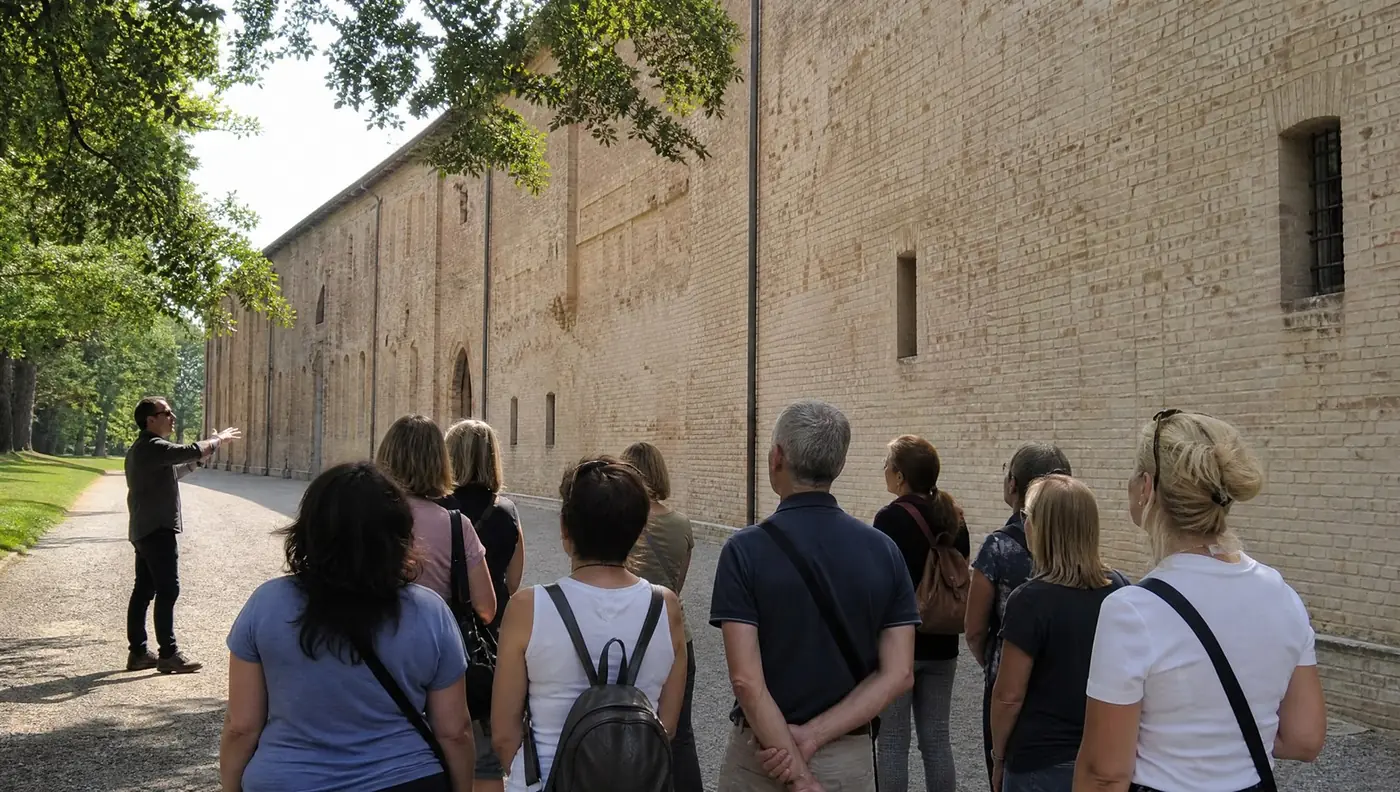
Everybody looks up. The vault of this chapel is the thing photographs cannot do, and the reason is not composition, it is chemistry and money: that blue was the most expensive material in the building, it could not be made, only dug up, and it could not be painted into the wall the way every other colour in the room was.
Why it was ground rather than mixed
Most of the colours on these walls are earths: ochres, red earth, green earth, lime white, charcoal black. You dig them, wash them, and you have paint. Several of them can stand in for each other, and a painter short of one can mix something close.
Ultramarine is not like that. There is no combination of cheap pigments that produces it. The alternative a medieval workshop actually had was azurite, which was a common mineral in Europe rather than an import from Afghanistan, and which weathers towards green as it turns to malachite — cheaper, nearer to hand, and not the same colour a hundred years on. So the only route to this colour ran from a mountain in Badakhshan to a merchant to a workshop in Padua, and every gram of it was carried that distance. When people say the blue was worth more than gold, that is the shape of the claim: not that it was pretty, but that it had no substitute and an absurd supply chain.
And grinding the rock is only the start of it, because ground lapis is mostly not blue. Cennino Cennini, whose painter’s handbook was probably written in the 1390s, about ninety years after this chapel was finished, sets out the method: grind the stone, work the powder into a mass of melted wax, resins and oils, wrap the mass in cloth and knead it in a weak lye solution. The blue particles sink out into the liquid; the grey and the gold-flecked rubbish stays in the dough. You do it at least three times, and each extraction after the first is poorer than the one before. The first washing was the colour you put on the Virgin.
Why it had to go on dry, and what that cost later
True fresco works because you paint into wet lime plaster and the plaster, setting, takes the pigment into itself. It is a wonderful method and it is greedy: the wet plaster absorbs, and it absorbs indiscriminately. Put the most expensive substance in the building into a surface that will swallow a proportion of it and you have thrown money at a wall in the least visible way possible.
So ultramarine was applied a secco, on plaster that had already set, in a binder such as egg — and the Scrovegni Chapel is one of the standard examples of the practice. The trade-off is the one every conservator knows: paint laid on dry plaster sits on the wall rather than in it, and over seven hundred years the layer that sits on top is the layer that lifts, flakes and goes. When you read that a fresco’s blues have suffered more than its other colours, this is why, and it is a fact about method rather than about the painter.
If somebody in the chapel tells you a passage of blue has been restored, this is the reason: the blue is structurally the most vulnerable paint in the room, not because of the pigment but because of where it had to be put.
Why the vault reads as sky
Three things do it at once, and none of them is subtle once you know.
- It is a barrel vault. A curved surface with no corner to give away where it stops. Your eye has nothing to measure the distance against.
- It is one colour, held all the way over. Not a pattern with blue in it — a field. Continuous colour over a curve is what the actual sky does.
- The stars are gold on deep blue at night-time value. The vault is not painted the colour of a daytime sky; it is painted the colour of a sky that has stars in it, which is a decision about time of day as much as about decoration.
Stand under it for thirty seconds before you look at anything else. It is the part of the room that reproduction most completely fails, and the part that most reliably stops people talking (then look at the walls).
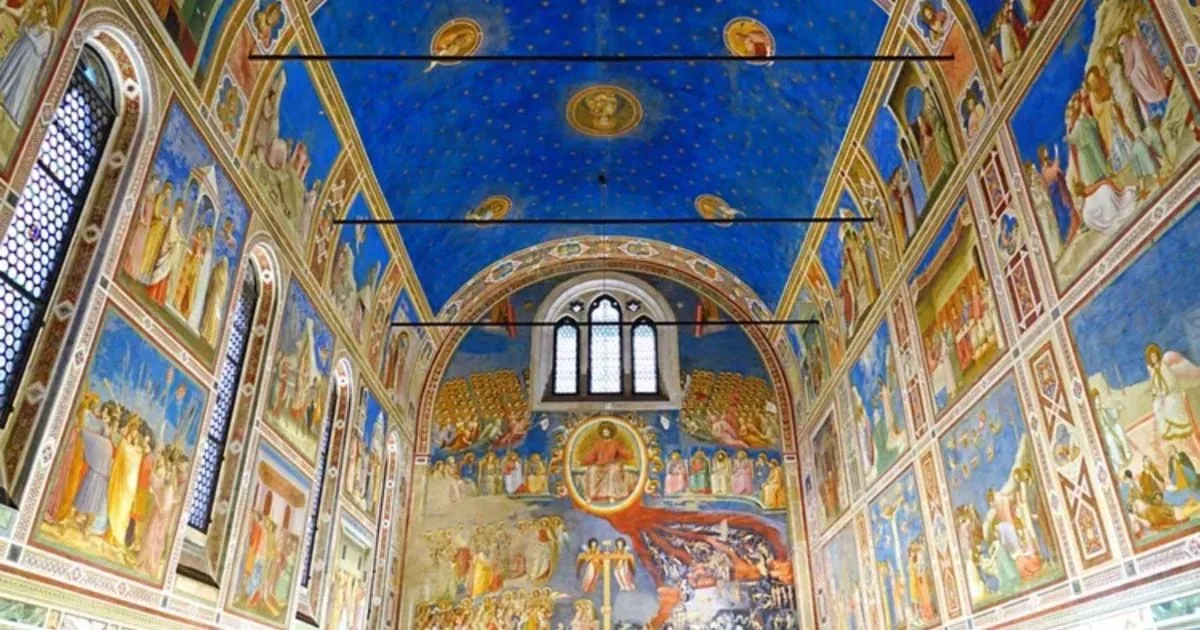 Most-reviewed
Guided Tour of Giotto's Scrovegni Chapel
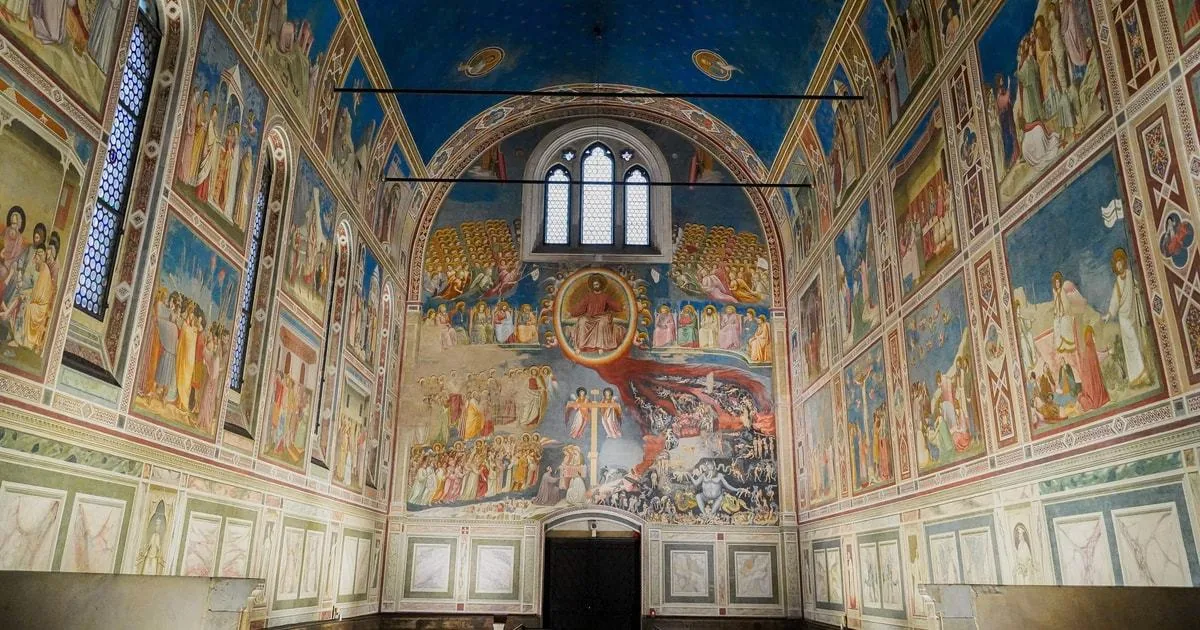 Sacred art of Padua
Padua: Scrovegni Chapel & Basilica with Sacred Art Guide
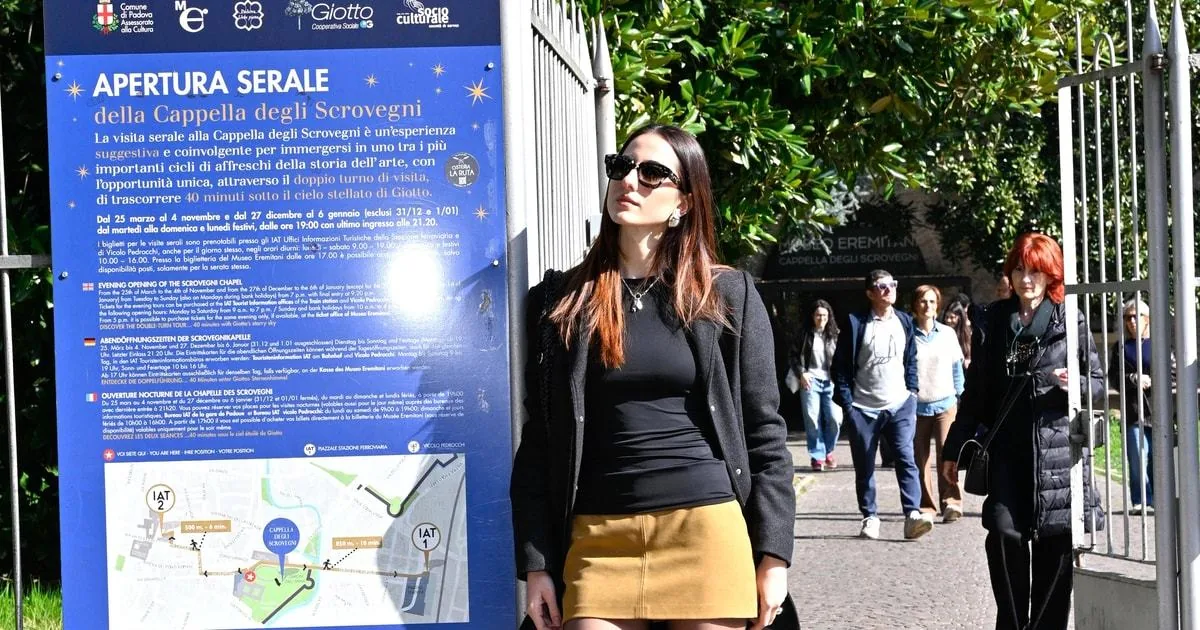 After dark
Padua: Evening Tour with Admission to the Scrovegni Chapel
Related: how a fresco is made, and why secco flakes, what is on the walls under that vault, and the painter.
Frequently asked questions
What is the blue in the Scrovegni Chapel ceiling?
Ultramarine, made from lapis lazuli mined near Sar-i-Sang in Badakhshan, in what is now Afghanistan. It was the most expensive pigment available in 1303 and it had no substitute: no combination of cheaper colours produces it. The vault is painted as a night sky, deep blue with gold stars.
Why was lapis lazuli ground rather than mixed?
Because there was nothing to mix it from. Ultramarine is not a compound of other pigments; the colour exists in a particular rock and nowhere else in a medieval workshop. Grinding is only the first step — ground lapis is largely grey, and the blue has to be washed out of the grindings in a wax, resin and lye process described by Cennino Cennini, repeated at least three times, each pass poorer than the last.
Why does the blue flake off frescoes?
Because it was not painted in fresco. Wet plaster absorbs pigment as it sets, which would waste the most costly material in the building, so ultramarine was applied a secco — on dry plaster, in a binder. Paint that sits on the wall rather than in it is the paint that lifts over centuries. The difference explained.
Was the blue really more expensive than gold?
The claim you will hear in the chapel is about supply rather than about carats: ultramarine had no substitute, came from one distant region, and lost most of its bulk in processing.