Is the Scrovegni Chapel worth visiting? Yes — and here is exactly what you are trading for it
Nobody types this question because they doubt Giotto. They type it because the trade looks absurd written down: a train to a city you were not going to, about nine euros with the booking fee, a reservation made weeks in advance that cannot be moved to the day you feel like going, and fifteen minutes at the end of it.
What you are actually paying, and it is mostly not money
Admission with the booking fee is about nine euros, and the same ticket also opens the Eremitani Museum and Palazzo Zuckermann, except on Mondays (the full tariff, with the arithmetic). By the standards of anything else you will queue for in Italy, that is not the expensive part.
The expensive part is friction. You have to decide, weeks out, that on a named day at a named quarter of an hour you will be standing in a garden in Padua. You cannot reschedule around weather, a late train or a good lunch. If it sells out you do not get a consolation option, because there is no door ticket to fall back on. For a certain kind of traveller — the kind who books the flight and improvises the rest — that is a genuine cost, and it is the one worth thinking about before you look at the price at all.
What fifteen minutes buys that a book does not
Three things, and it is the three together that make the booking worth making.
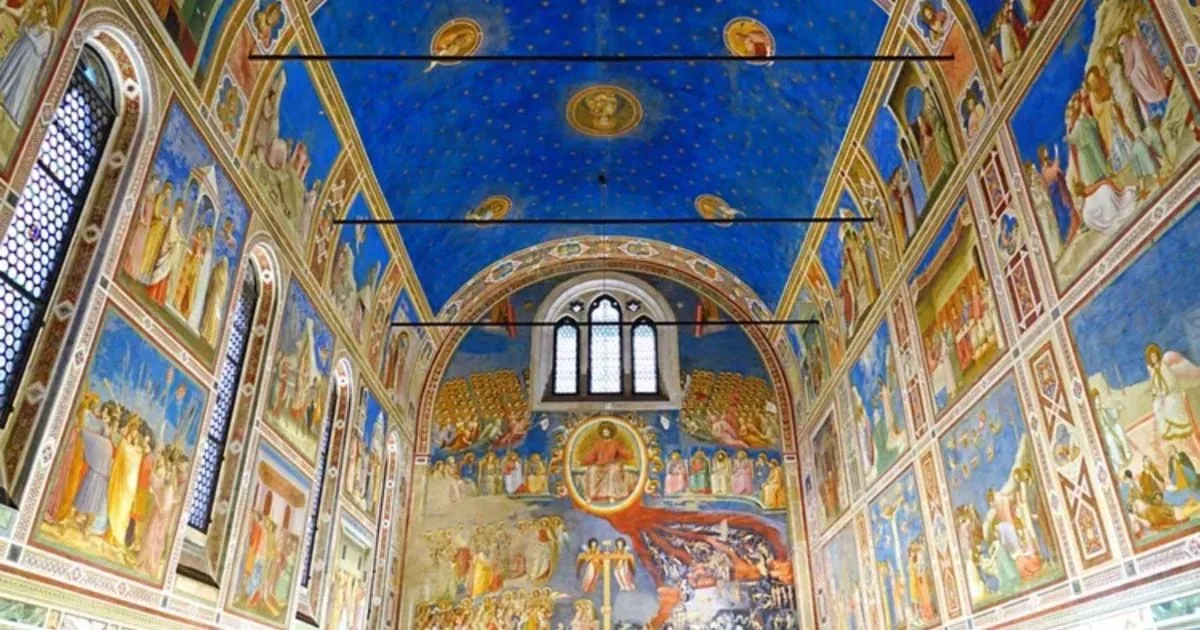
Scale, which reproduction destroys. The panels are printed in every survey of Western art at the size of a postcard. In the room they are above you and around you, three tiers deep on both long walls, and the figures are close to life-sized. The vault is the part nobody is prepared for: a barrel of deep blue with stars on it, which reads as sky and was meant to (where that blue came from).
Completeness, which almost nowhere else has. Most medieval cycles reach us in fragments — a wall here, a chapel gutted there, a Baroque refurbishment over the top. This one was painted as a single programme in two years, read as a descending spiral from the top band down, and it is all still there, including the grisaille figures along the dado pretending to be carved stone (what is on each tier).
The turn. The narrative ends behind you. You walk in facing the altar, spend your quarter of an hour looking at the walls and the ceiling, and the thing you are meant to see last is the entire entrance wall, which the operator calls “the grandiose Universal Judgement, which concludes the story of human salvation”. Kneeling in it, on the side of the blessed, is the man who paid for the room, holding up a model of it (the wall, and the man in it). Most visitors walk straight past it, which is the best argument on this page for having somebody with you who knows where to point.
What the reviewers say about price and value
The eleven listings that get you inside carry 838 written reviews between them, and the full text of 74 of those, across all thirteen listings, is what this site quotes from. Two things come up repeatedly in them, and they pull in opposite directions.
The first is that people think a guide is worth paying for here, and they say so in terms of the fifteen minutes specifically. J, on the private city walk: “The 15 minutes visitors are allotted in the chapel would have been wasted without her.” Ashley, on the evening tour: “very helpful to have extra history lesson for context to understand the amazing art. It was on the expensive side, but I felt it was worth it.” Michael, on the same listing, is the most complete verdict on this whole site: “An expensive choice but one worth it for the knowledge, ease of getting entry into the chapel as well as a quiet evening slot without the crowds.”
The second is that people notice what they paid. Ilaria, on the small-group walk: “Excellent and well-organized guide. The cost is a bit high.” The ticket-only listing sits at 3.8 against the guided visit’s 4.7, and it carries about a fifth of all the written reviews on the listings that get you inside — 165 of 838.(what those reviewers actually say).
The guided visit carries 332 written reviews against that listing’s 165, which is twice as many, and rates 4.7 against 3.8.
What works
- One painter’s complete programme, walls, vault and entrance wall, painted between 1303 and 1305 and still all there
- UNESCO-inscribed in 2021 as part of “Padua’s fourteenth-century fresco cycles”, with a citation about the beginning of a revolution in mural painting
- About nine euros with the booking fee, and the same ticket opens two more museums on any day but Monday
- Twenty-five admitted per visit, so it is never the crush that a famous room usually is
- Padua is small, flat and walkable, and the rest of a good day is ten minutes away on foot
- A guide is genuinely useful here, and reviewers say so in terms of the fifteen minutes rather than in general
Worth knowing
- Fifteen minutes inside, whichever ticket you choose
- No same-day tickets — the trip has to be planned around the slot rather than the other way round
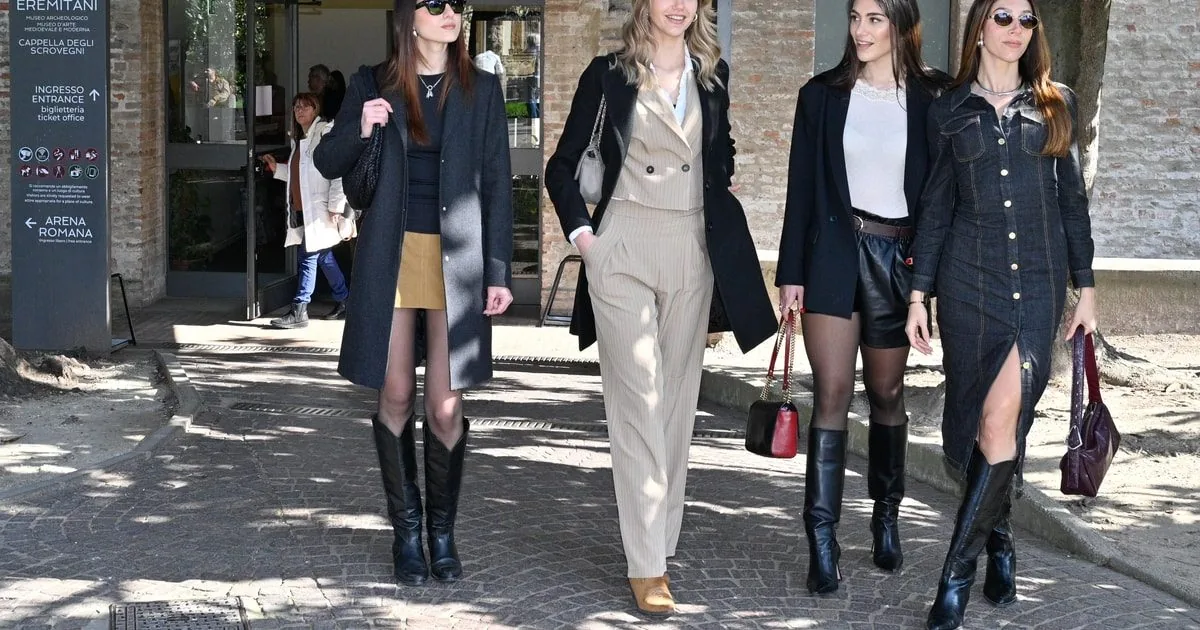
- The published address is the ticket office and the chapel is a hundred metres further; five reviewers on four listings got lost
- On a Monday the two museums on the same ticket are shut, so another day gives you more on the same ticket
- If it is sold out for your dates there is no fallback, because there is no door ticket
- A resold ticket includes the same fifteen minutes, with the booking already made for you
Book it right, and it is worth it
Hold the slot before you travel. An afternoon in Padua with no reservation is the one way to miss this room, because nothing is sold on the day — so if your dates are close, book first and plan the rest of the day around the time you are given (what else fills a Padua day). Come knowing what is on the walls, or bring somebody who does: fifteen minutes is long enough to see all of it and short enough that working out what you are looking at eats the visit. And allow for the hundred-metre walk from the ticket office and the wait in the glazed room — both are part of the slot you booked.
Everyone else: yes. Book it, read the walls first, and turn round before you leave.
 Most-reviewed
Guided Tour of Giotto's Scrovegni Chapel
 Capped at ten
Padua: Small-group walking tour with the Scrovegni Chapel
 Best-value option
Padua: Scrovegni Chapel Ticket and Audio Guide
Can’t make these dates?
Browse more available Scrovegni Chapel tours and find one that fits your schedule — all with instant confirmation and free cancellation.
The rest of the decision: how long you get, what it costs and covers, how to actually get a slot, why the room matters, and every review we quote, with its listing.
Frequently asked questions
Is the Scrovegni Chapel worth visiting?
Yes, for a reason that is specific rather than general: it is one painter’s complete programme, painted between 1303 and 1305, still covering every surface of one room in the order it was meant to be read. UNESCO inscribed it in 2021 as part of “Padua’s fourteenth-century fresco cycles”. The cost that matters is not the money but the planning, because there are no same-day tickets.
Is fifteen minutes in the Scrovegni Chapel worth the trip?
It is if you arrive knowing what you are looking at. The quarter of an hour is fixed by the doors, which open once on the way in and once on the way out to keep the interior climate steady, so the only variable is you. One reviewer wrote that the fifteen minutes “would have been wasted without” her guide. What to look at, and in what order.
Is the Scrovegni Chapel a worthwhile place to visit for the price?
Admission with the booking fee is about nine euros and the same ticket also covers the Eremitani Museum and Palazzo Zuckermann on any day but Monday, so the value question is really a question about what you add to it — a guide, an evening slot, a whole day out of Venice. The tariff and what it includes.
Do I need a guide for the Scrovegni Chapel?
A guide is optional for entry. What a guide changes is the quarter of an hour itself: several reviewers say the time inside would have been wasted without one, and the guided visit carries twice as many written reviews as the resold ticket listing — 332 against 165 — and rates 4.7 against 3.8. All thirteen listings compared.
Who is disappointed by the Scrovegni Chapel?
Reliably, three groups: people who arrive in Padua without a booking and discover there is no door ticket; people who wanted to sit with the paintings rather than see them; and people who visit on a Monday, when the two museums on the same ticket are closed. None of those is about the frescoes.
Is the Scrovegni Chapel better with a tour or on your own?
The ticket alone costs less and buys the same fifteen minutes. A tour spends those fifteen minutes on the walls instead of on working out what you are looking at, and on most of our listings it also hands you a booking somebody else has already made. Which is right depends on whether you would rather read on the train or be told in the garden. If it is the train, start here.